An RFID gate turns a doorway into a booking point: whatever passes the read zone is captured, checked against an expectation and booked, without anyone scanning. For that, the read zone has to match the traffic, the direction has to be detected, tags in the surroundings must not be read along, and the software has to turn hundreds of individual reads into one event. The form factors of readers in general are covered in our guide to RFID readers, the fixed devices for gates under UHF RFID readers.
Form factors: portal, walk-through, dock door, tunnel and overhead
Portal gate at goods-in
The classic form factor for pallets and mesh boxes on a forklift: two frames or pillars left and right of the lane carry one or two antennas each, and for tall loads an antenna above the lane is added. For a lane 3 to 4 m wide, four antennas on a reader with four to eight ports are enough. The antennas are circularly polarised because the orientation of the tags on the pallet is unknown. The frame needs impact protection.
Walk-through gate for people, laundry and tools
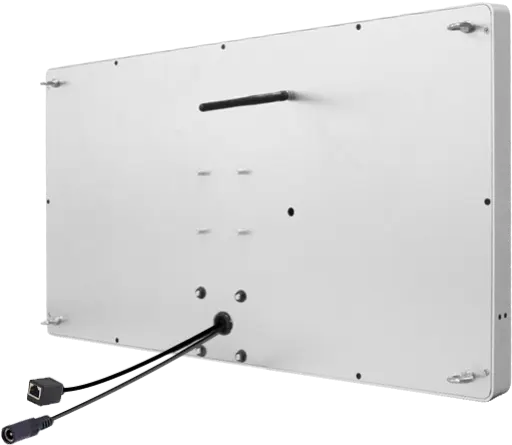
For laundry bags, tool boxes, media or containers carried through a door by hand, the antennas sit in panels or pillars on both sides of the doorway, much like retail security gates. The read zone is small, 1 to 1.5 m, and can be confined cleanly with low output power. A light barrier triggers the read and supplies the direction, an LED strip or buzzer confirms the booking. To capture the person as well, the gate is combined with a badge reader.
Dock door with overhead reader
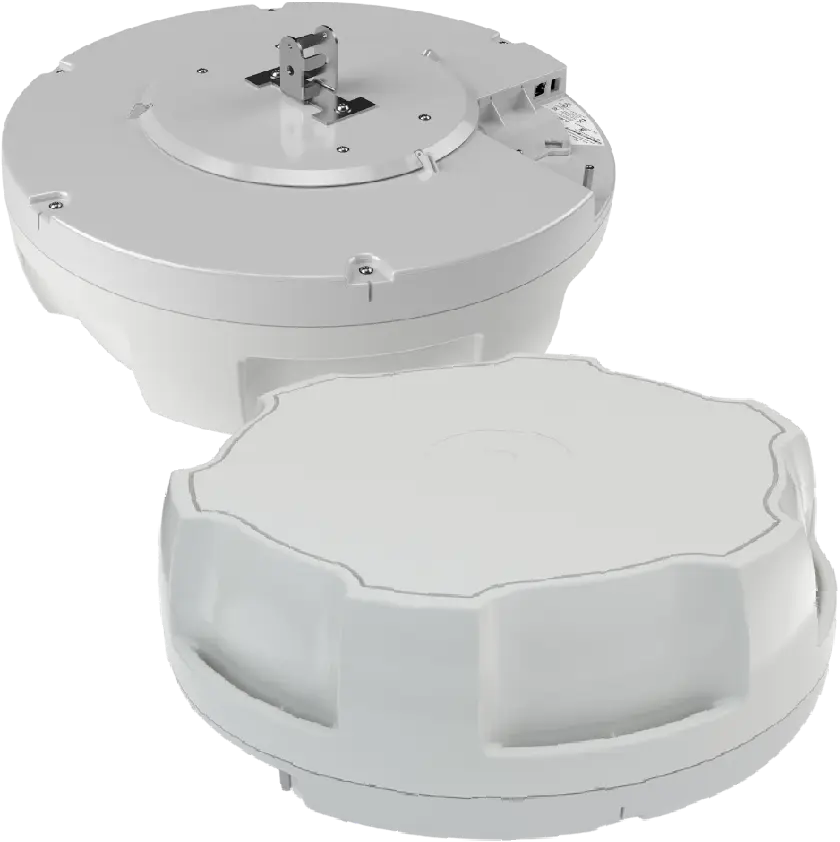
At loading doors, frames in the lane get in the way. Overhead readers such as the Zebra ATR7000 hang above the door and steer their beams electronically (beam steering with a phased-array antenna). The movement of the tags through the beams yields the direction without a light barrier; depending on door spacing, one unit covers two doors.
Tunnel gate on the conveyor
Where individual cartons or items are counted, the gate is a shielded chamber over the conveyor. Antennas on several sides read the carton from all directions, and absorbers and metal walls confine the zone to the tunnel. Cartons with 50 to 200 labels can be read completely while the goods stay on the belt: the form factor with the best item-level read rate, for retail, pharma and e-commerce fulfilment.
Overhead reader with integrated antennas
The CT GateSense is a gate in one housing: reader and antennas sit in a ceiling-mounted unit with up to 33 dBm output power and up to 6 m read range, plus an RGB LED strip and an EAS alarm for feedback at the doorway. An optional millimetre-wave radar detects people and their direction. It connects via TCP/IP, PoE, Wi-Fi or RS232. The form factor suits doors where no frame should stand: laundries, smart cabinets, tool cribs, waste logistics.
Components of an RFID gate
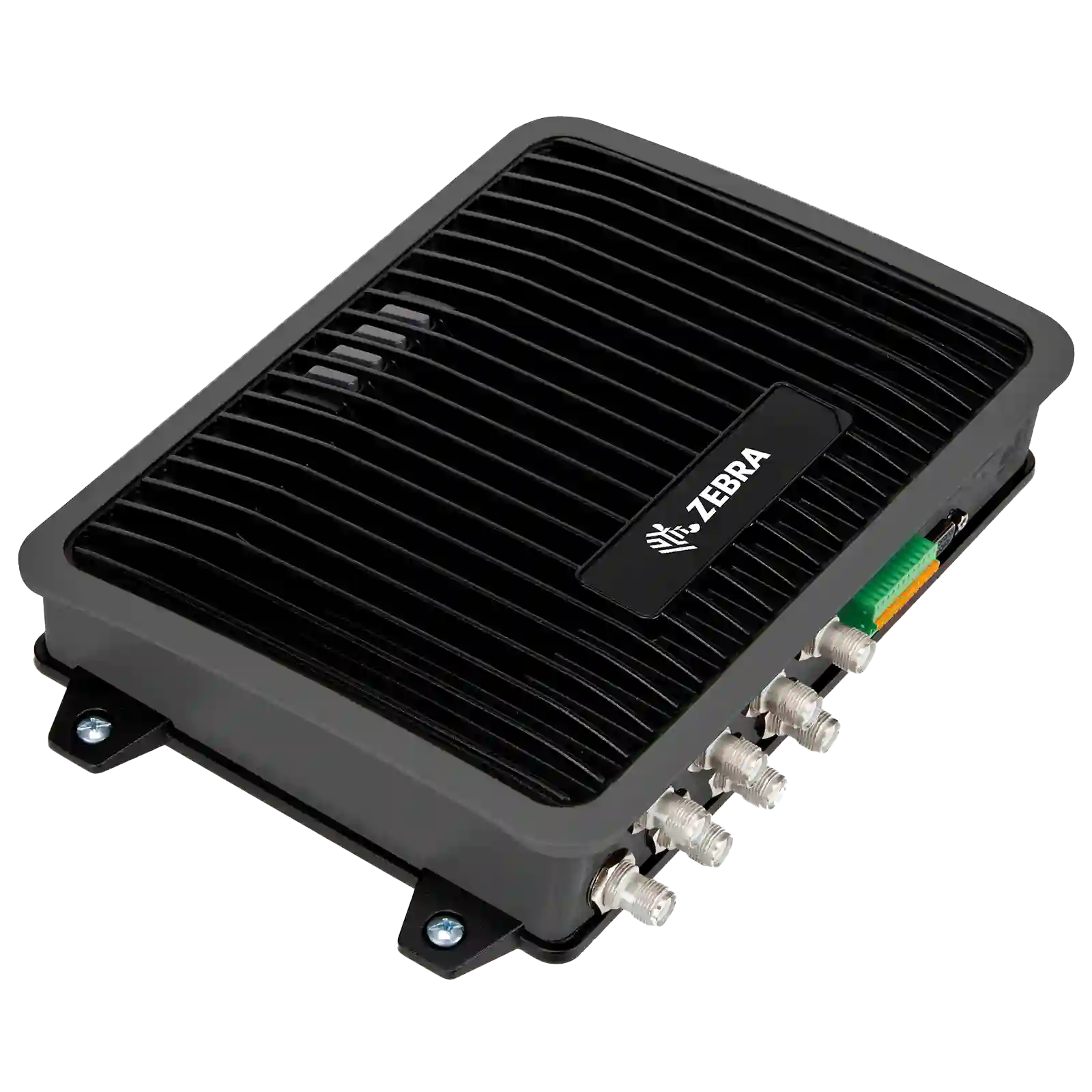
- Reader: number of antenna ports (typically 4, 8 for large portals), output power up to 30 to 33 dBm, sensitivity, interfaces (Ethernet with PoE, RS-232/485, GPIO for light barrier and signal light), protocols (LLRP, MQTT, REST). Examples: Impinj R700 / R720, Zebra FX9600, Chainway UR4 and Chainway UR8; for outdoor sites Zebra FXR90 and CAEN Proton with IP67 and IP65.
- Antennas: two to four per lane. Circularly polarised antennas read tags in any orientation and give up about 3 dB against a matched linear antenna. The beamwidth shapes the read zone: wide for portals, narrow for doorways and tunnels.
- Cables: every metre of antenna cable costs power, about 0.25 dB per metre at 900 MHz for thin cables. Reader close to the antennas, short cables, 50-ohm connectors.
- Sensors: light barriers before and after the zone, radar or motion detectors as trigger and for direction. They save transmit time and stop the gate from reading into the hall all day.
- Signalling: LED strip, signal light, buzzer or display so drivers and staff can see whether the booking went through.
- Mechanics: frames, pillars or ceiling mounts, impact protection, IP65 or IP67 rating outdoors and at wash-down areas.
- Middleware: filters (RSSI threshold, minimum read count, time window), deduplication, direction logic, matching against the expectation from the WMS or ERP, booking as one event per load carrier.
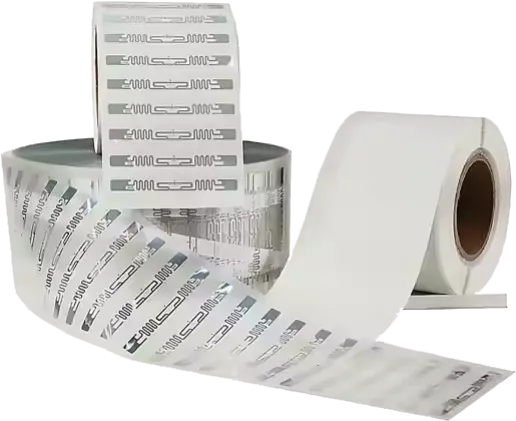
- Tags: label, hard tag or on-metal tag depending on the goods and placement; form factors compared under RFID tags and transponders, range under UHF RFID tags and labels.
Direction detection: is the pallet coming or going?
A gate that only counts is a counter. Direction is what turns it into goods-in or goods-out. Four methods have proven themselves: antenna sequence (which antenna saw the tag first), two light barriers before and after the zone, radar for people, and the evaluation of phase and signal strength over time as delivered by overhead readers with beam steering. The special cases are the critical part: the forklift that stops in the zone and reverses, the pallet pushed halfway through and pulled back. That is why the direction logic belongs in the middleware, with a time window and one unambiguous rule for when a movement is complete.
Avoiding stray reads
The most common disappointment in the first test: the gate also reads the pallet on the rack five metres away. UHF is long range, and an antenna at 30 dBm reads further in free space than any lane is wide. So the read zone is deliberately made tight: lower the output power per antenna until the lane is read reliably and nothing beyond it; tilt the antennas down into the lane; use absorbers or metal walls at doorways and tunnels; choose antennas with a narrow beamwidth or near-field antennas. In the software, an RSSI threshold, a minimum number of reads per tag and matching against the expected list from the WMS help: what was not announced is reported but not booked. Tagged goods stored permanently next to the gate belong behind shielding. In Europe, four channels at 2 W ERP are available in the upper band (the 915 to 921 MHz band at 4 W ERP is not released in Germany); where several gates stand side by side they share these channels and read staggered in time or in dense reader mode.
Read rate and bulk size
The readers are rarely the limit: an Impinj R700 reads up to 1,100 tags per second, a Chainway UR1A more than 1,300. The limit is set by the time in the zone and the physics of the goods. A forklift at 2 m/s crosses a 3 m zone in 1.5 seconds, and every tag has to reply at least once in that time. Liquids attenuate the field, metal reflects and shadows, densely packed labels detune each other. At pallet level, complete capture is standard; at item level inside the pallet it depends on the goods, the tag and its placement. Ten passes with a known pallet, counted against the target list, show whether output power, antenna angles and Gen2 parameters (session, Q value, reader mode) fit. What is still missing afterwards is solved with different tag placement, a different tag or a tunnel, not with more power.
Examples from practice
- Goods-in and goods-out: the gate matches the EPCs read against the delivery notice and books; deviations show on the signal light before the forklift moves on.
- Laundry: laundry bags and containers with UHF textile tags such as the Xerafy Tex Trak (more than 200 wash cycles) are counted at the doorway: what goes out to the customer, what comes back, what is missing.
- Tool crib: a walk-through gate with a badge reader books who takes which tool and who brings it back; hard tags such as the Xerafy Roswell survive workshop life.
- Production and kanban: load carriers pass gates between stations and the software keeps the stock per station; more under RFID in industrial automation.
- Vehicle and personnel access: windscreen tags at the barrier, badges at the turnstile; see RFID access management.
- Library and archive: media with HF labels have passed through security gates for years; archive boxes with UHF labels can be captured at the stack exit with a walk-through gate.
What does an RFID gate cost?
The cost comes down to six items: reader class and number of ports, number and type of antennas, sensors and signalling, mechanics and installation, integration into the WMS or ERP, and the tags, which are the largest running cost for consumable goods. An overhead reader with integrated antennas comes in well below a portal with four antennas and impact protection; a tunnel with shielding and conveyor integration is the most elaborate form factor. The CT GateSense with its price in the IDCRAFT Shop gives a first reference for the hardware. For a reliable quote we need lane width, goods, tag population and the required integration; then we calculate gate by gate.
Readers and tags for RFID gates in the IDCRAFT range
- CT GateSense: overhead reader with integrated antennas, 33 dBm, 6 m, LED strip, EAS alarm, optional radar; price and availability in the IDCRAFT Shop.
- Zebra ATR7000: overhead reader with beam steering for dock doors and areas, direction detection, PoE+.
- Impinj R700 / R720: portals with high tag density, up to 1,100 tags per second, PoE+.
- Zebra FX9600: up to 8 antenna ports, PoE, for large portals; in the IDCRAFT Shop.
- Chainway UR4 (4 ports) and Chainway UR8 (8 ports): Impinj E series, 30 dBm, Ethernet and RS-232; UR4 and UR8 in the shop.
- Zebra FXR90 and CAEN Proton: IP67 and IP65 for outdoor sites and wash-down areas.
- CT URIIA: integrated 5 dBi antenna, up to 5 m, IP67, Modbus and optional Profinet, for single lanes and kanban points; in the IDCRAFT Shop.
- Tags: CT RFID Label for cartons and pallets, HID IQ On-Metal for mesh boxes and metal containers, Xerafy Tex Trak for textiles; overview under UHF RFID tags and labels.